10 Upcycled Garden Ideas

Upcycled Garden Ideas
Transforming discarded household items and reclaimed building materials into functional gardening features requires a structured understanding of drainage engineering, soil containment, and weather-resistant surface sealing. On popular visual discovery networks like Pinterest, curated upcycled garden ideas serve as essential structural blueprints for converting everyday waste into high-utility, visually engaging landscape centerpieces. Readers will learn how to select safe non-toxic salvage substrates, construct vertical planting grids, implement self-watering capillary reservoirs, and anchor heavy planters with absolute structural stability. Successfully navigating the physical characteristics of aged woods, galvanized metals, and repurposed masonry allows garden owners to curate outdoor spaces that feel cohesive, organized, and structurally authentic. This comprehensive manual delivers ten practical landscape upcycling concepts that operate smoothly as accessible creative project templates, regardless of your current gardening background. By prioritizing clean structural lines and smart material repurposing, these targeted strategies transform forgotten items into high-end agricultural features that follow contemporary modern design principles.
The current movement in sustainable residential landscaping places massive value on low-impact, durable installations that maximize plant production without generating excessive landfill waste. Repurposed garden structures have emerged as prominent trending ideas because they resolve common outdoor challenges, such as restricted soil beds, invasive weed spread, and high irrigation costs, without requiring expensive retail container investments. The practical value of establishing an organized upcycled garden framework lies in its capacity to expand vertical growing surface area while fostering a serene, clutter-free atmosphere that improves food and flower cultivation. For beginners, executing a basic wooden pallet planter modification or converting a vintage metal colander into a hanging basket represents an exceptionally manageable DIY project that introduces a high aesthetic impact with a low initial financial investment. This disciplined styling approach pairs direct agricultural utility with long-term material durability, providing excellent inspiration for creative home organization and future landscape planning. Implementing these versatile techniques allows individuals to customize their garden beds effectively while maintaining a highly polished presentation.
Successful execution of a comprehensive garden upcycling project depends entirely on thorough substrate preparation and assembling appropriate crafting tools before introducing moist soil mixes. Required materials and tools generally include untreated reclaimed pallet timbers, galvanized hardware mesh, heavy-duty breathable landscape fabric membranes, cordless drills, masonry drill bits, exterior wood screws, non-toxic waterproof sealers, safety goggles, and utility shears. Planning considerations must strictly prioritize the historical origin of your salvaged containers, ensuring that old industrial timbers or painted metal tubs are completely free from toxic chemical treatments like creosote or lead pigments. Measuring the drainage capacity of each vessel and pre-drilling adequate bottom drainage holes prevents root suffocation and fungal rot during heavy seasonal rainfall. Clearing away loose debris, removing corroded structural nails, and lining timber frames with porous geotextile sheets establishes an organized step by step tutorial workflow that guarantees long-term plant vitality and structural stability across your garden.
1. Vertical Reclaimed Pallet Herb Troughs
Step-by-Step Guide
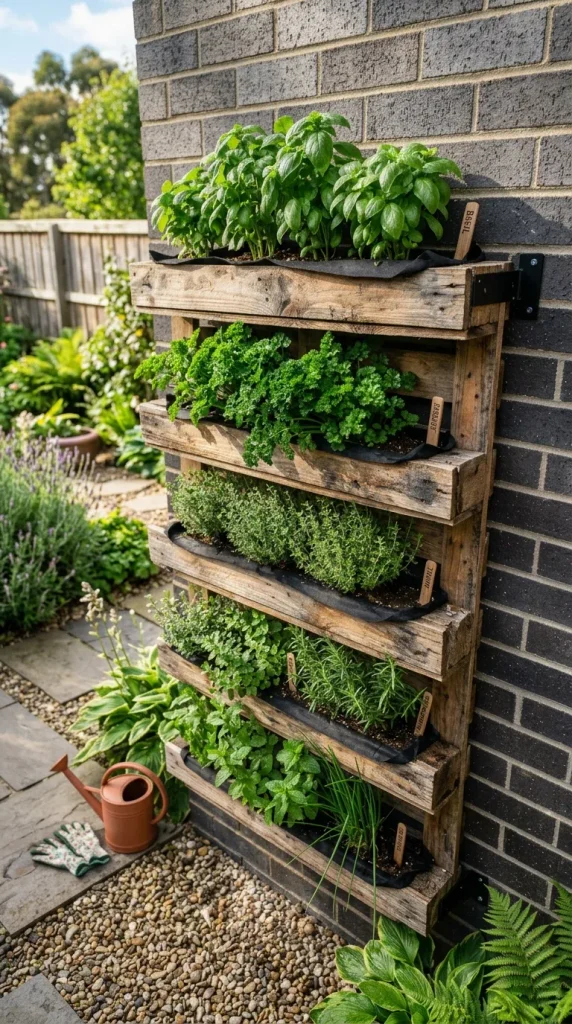
Configuring a vertical reclaimed pallet herb planter relies on securing durable landscape fabric pockets behind the internal cross-slats of an untreated wooden shipping pallet. To execute this creative project, inspect the pallet frame to verify it bears the official heat-treated stamp, ensuring it is entirely free of chemical preservatives. Sand down the rough exterior pine boards using medium-grit sandpaper before applying two coats of non-toxic exterior timber oil. Secure heavy-duty breathable landscape fabric across the bottom and backside of each horizontal slat cavity using a staple gun loaded with galvanized steel staples, forming five separate planting troughs. Fill each interior fabric pocket with a nutrient-rich mixture of potting compost, coarse perlite, and slow-release organic fertilizer granules. Plant compact culinary herbs such as sweet basil, curly parsley, and thyme directly into the stepped tiers. This vertical arrangement provides exceptional space efficiency for narrow balconies, keeping edible greens elevated and easily accessible.
2. Galvanized Wash Tub Salad Planters
Setup Method
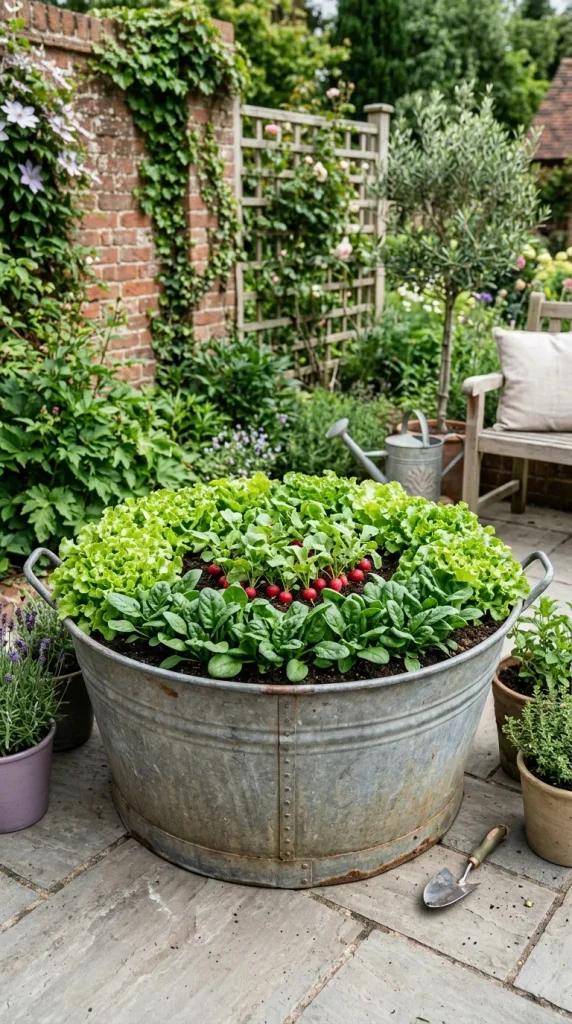
Traditional plastic shallow planters often crack, warp, and discolor rapidly under intense direct summer ultraviolet radiation. Resolve this durability limitation by drafting a layout blueprint for a multi-tiered vegetable container utilizing a repurposed vintage galvanized steel wash tub. Drill twelve half-inch drainage holes evenly across the bottom metal base using a high-speed steel step drill bit lubricated with machine oil. Place a two-inch foundational drainage layer of coarse river gravel over the drilled holes, covering the stone base with a permeable circle of spun-bond landscape fabric. Fill the container with a lightweight potting mix formulated specifically for leafy greens, mounding the soil two inches below the rolled metal top rim. Sow loose-leaf lettuce varieties, baby spinach, and radishes in dense concentric rings across the broad circular surface. The heavy zinc-coated steel carcass completely resists structural rust, offering a durable, modern industrial aesthetic that anchors patio dining zones.
3. Suspended Vintage Colander Hanging Baskets
Execution Process
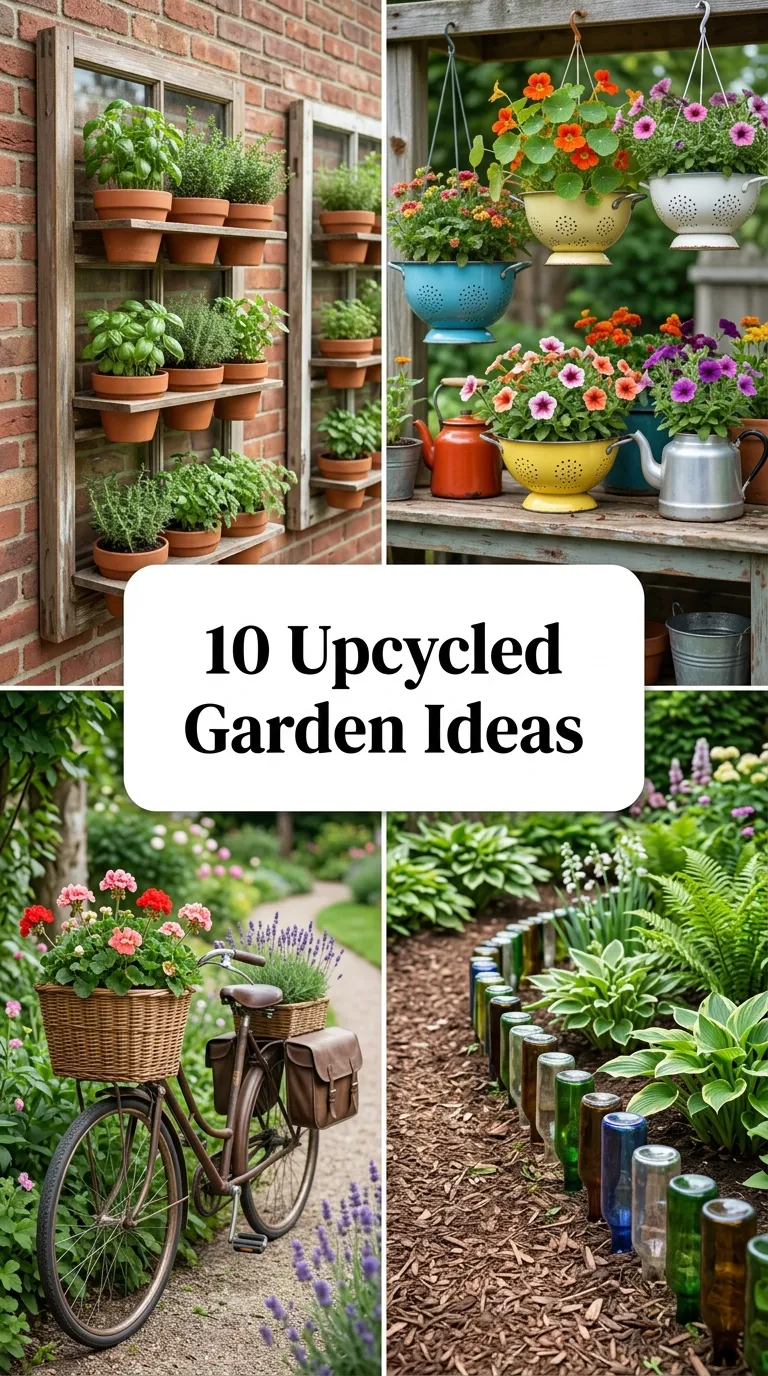
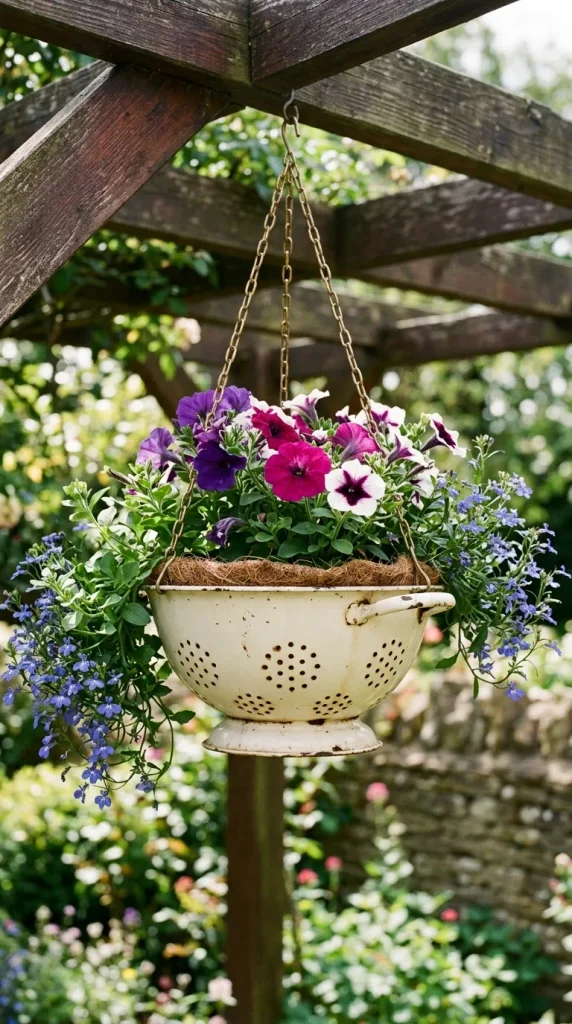
Mismatched commercial wire hanging baskets often require frequent, messy moss lining replacements that dry out rapidly under breezy outdoor patio conditions. Eliminate this maintenance bottleneck systematically by converting vintage enameled metal kitchen colanders into self-draining hanging flower bowls. Thread three identical thirty-inch lengths of rust-proof brass jack chain through three equidistant drainage holes located around the upper flared perimeter rim of the colander. Join the top ends of the three chain strands together using a heavy-duty stainless steel s-hook to create a perfectly balanced three-point suspension harness. Line the interior perforated bowl base with a pre-cut disc of porous coco coir fiber before filling the core cavity with moisture-retentive potting compost. Plant vibrant cascading trailing petunias, creeping lobelia, or trailing strawberries around the outer edges. The hundreds of pre-punched metal drainage holes prevent waterlogging, ensuring steady root aeration and lush floral displays.
4. Stacked Terracotta Pot Herb Spirals
How to Create
Incorporating a multi-tiered vertical growing tower inside a compact patio footprint relies on nesting porous clay flower pots in ascending size tiers. Select four unglazed terracotta pots with graduating base diameters of sixteen, twelve, ten, and eight inches, soaking the clay vessels in water for thirty minutes before assembly. Drive a five-foot-long galvanized steel rebar rod vertically into firm garden soil, ensuring the metal spike stands straight using a spirit level. Thread the largest clay pot over the metal pole through its central drainage hole, filling the base cavity with coarse potting soil to secure its position. Slide each remaining pot down the central steel spine sequentially, tilting each subsequent pot at alternating thirty-degree angles to rest firmly against the underlying soil bed. Plant compact trailing herbs like oregano and creeping rosemary into the exposed pocket shelves to create a sculptural vertical tower.
5. Reclaimed Ladder Climbing Vine Trellises
Setup Method
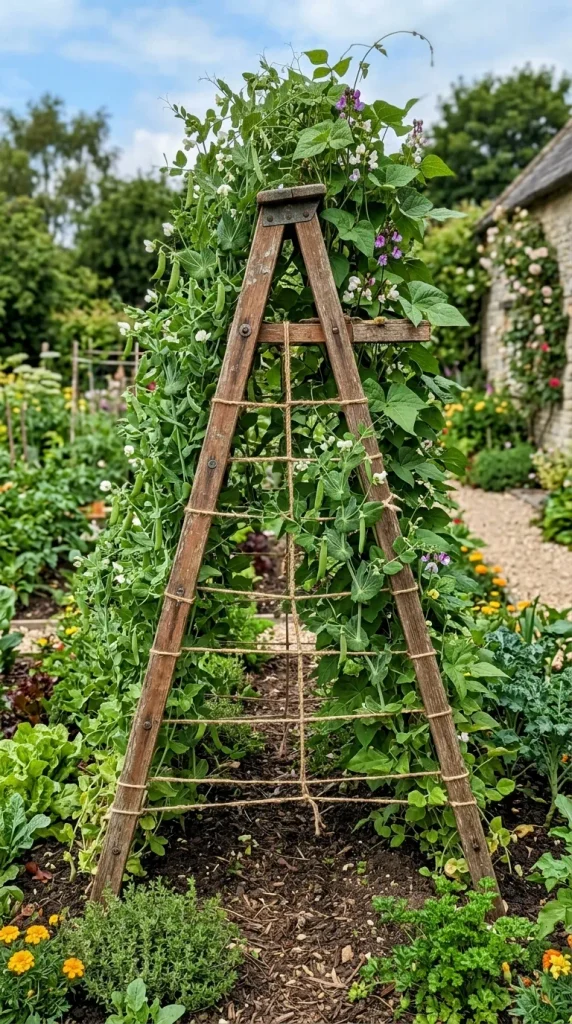
Allowing vigorous vining vegetables to sprawl uncontrolled across flat soil beds consumes vast amounts of ground space and exposes ripening crops to fungal soil pathogens. Organize these climbing crops systematically by repurposing an old wooden folding step ladder into an A-frame vertical climbing arbor. Unfold the wooden ladder completely over an active garden bed, locking the metal spreader braces firmly in place to establish rigid structural stability. Secure horizontal runs of heavy-duty jute twine or galvanized wire mesh across the open rungs on both sides of the ladder using small wood staples. Plant climbing crops like sugar snap peas, pole beans, or small heirloom cucumbers along the outer ground perimeter beneath the ladder legs. As the vines grow upward, weave the tendrils through the horizontal rungs to build a leafy vertical canopy that leaves the ground completely open for shade-tolerant greens.
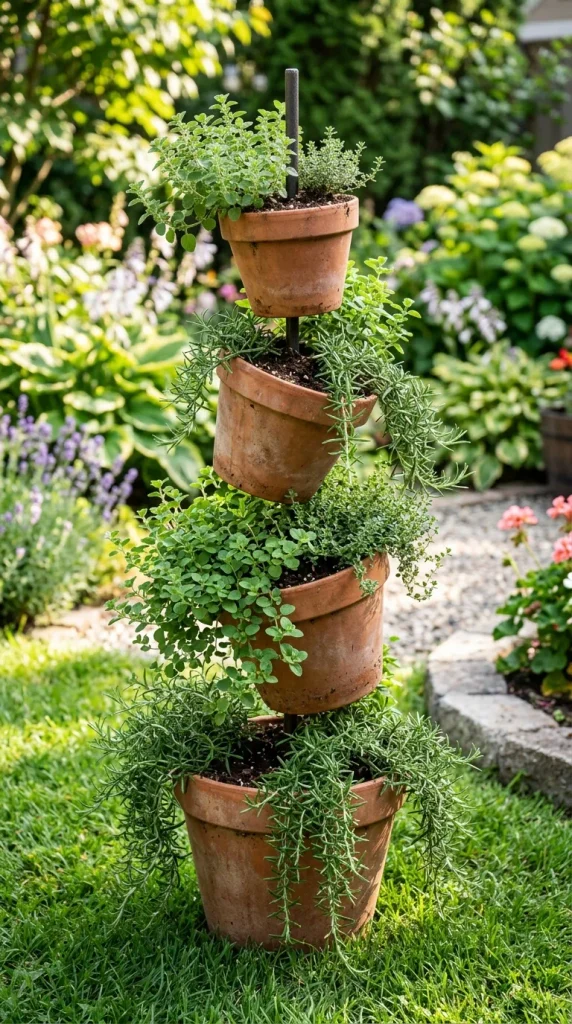
6. Cinder Block Tiered Succulent Benches
Step-by-Step Guide
Constructing an architectural, modular retaining wall planter with built-in drainage pockets involves stacking standard hollow concrete cinder blocks in a stepped geometric pattern. Level a rectangular four-foot ground footprint, laying down a flat base layer of crushed gravel to prevent the heavy masonry blocks from shifting into soft soil. Arrange five hollow cinder blocks side by side, stacking a second layer of three blocks centered on top to form an ascending stepped pyramid configuration. Apply high-strength polyurethane landscape construction adhesive between all touching concrete contact faces to bond the modular structure permanently. Cut small squares of wire hardware cloth to cover the bottom openings of each exposed hollow cavity before filling the compartments with a fast-draining cactus and succulent gritty soil blend. Plant low-profile succulents like echeveria and sedum into the hollow pockets, creating a striking modern geometric installation that resists severe weathering.

7. Repurposed Wine Barrel Water Reservoirs
How to Make
Managing a steady irrigation supply for thirsty container plants requires high-capacity rainwater collection systems that blend naturally into organic garden landscapes. Source an authentic fifty-five-gallon solid oak wine barrel, scrubbing the interior timber walls with a mild baking soda solution to remove lingering alcohol residues. Drill a three-quarter-inch hole three inches above the lower base hoop, threading a brass quarter-turn spigot valve tightly into the timber with silicone thread sealant. Install an overflow barb fitting near the upper metal band, connecting a flexible hose to divert excess rainwater into nearby garden beds during heavy storms. Cut a large circular opening in the top barrel lid, securing a fine stainless steel mesh screen over the aperture to filter out roof debris and block mosquito breeding. Position the heavy oak barrel directly beneath a downspout drop, elevating the base on cinder blocks to ensure gravity-fed water pressure for your watering cans.
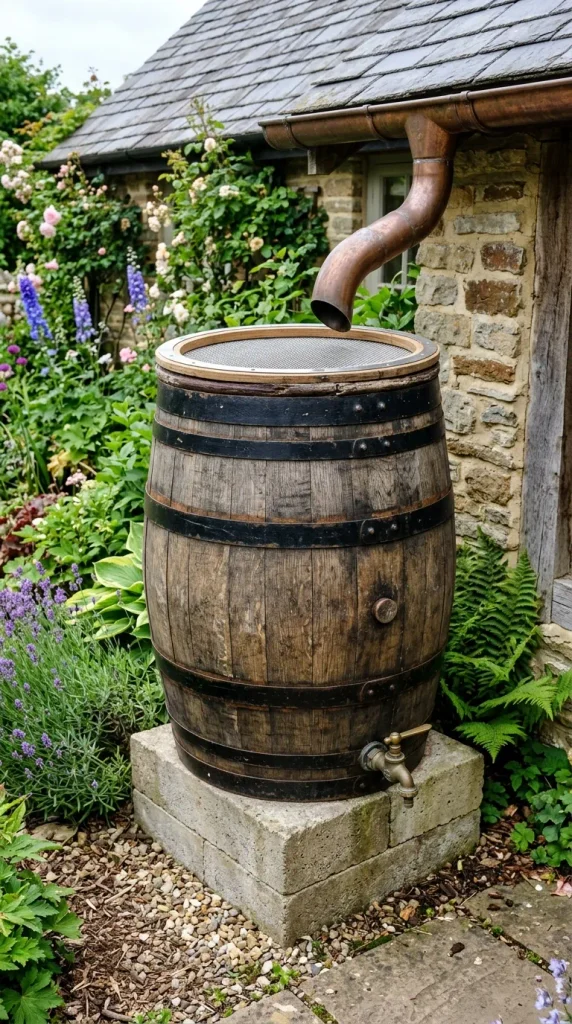
8. Vintage Mason Jar Wall Sconce Planters
Execution Process
Displaying indoor propagation cuttings or small culinary herbs along an outdoor fence wall can easily look cluttered if the containers lack a uniform mounting system. Eliminate this visual confusion cleanly by mounting a coordinated series of repurposed glass mason jars onto a reclaimed timber backboard. Secure three heavy-duty stainless steel worm-drive pipe hose clamps horizontally across a sanded four-foot cedar fence board using rust-proof wood screws. Slide a wide-mouth quart-sized glass mason jar into each open metal collar, tightening the adjustment screws firmly with a flathead screwdriver until the glass is locked in place. Place a one-inch layer of activated charcoal and coarse horticultural pumice at the bottom of each glass jar to prevent water stagnation in the undrained base. Fill the jars with clean potting soil and plant shallow-rooted microgreens or propagate houseplant cuttings in full view.
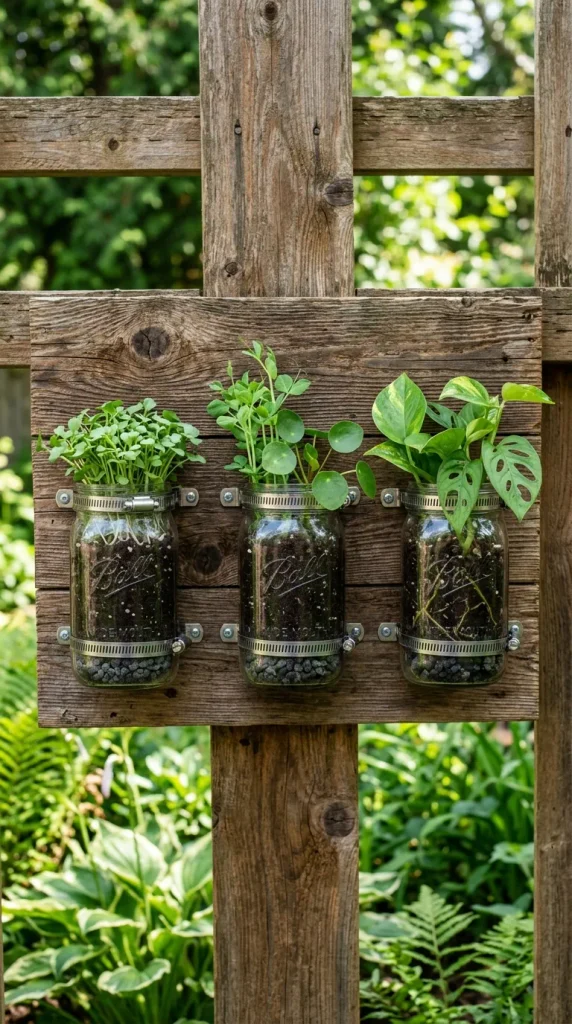
9. Upcycled Gutter Strawberry Wall Runs
Setup Method
Ground-level strawberry plants often suffer from slug damage, dirt splashes, and fruit rotting caused by direct contact with wet soil surfaces. Resolve these agricultural challenges by mounting repurposed aluminum roof gutters horizontally along a sunny outdoor wall or fence line. Cut seamless aluminum gutter profiles into matching five-foot lengths, crimping waterproof aluminum end caps securely onto both ends of each channel section with silicone caulk. Drill one-quarter-inch drainage holes at six-inch intervals along the bottom base line of each metal trough to allow excess irrigation water to escape freely. Fasten the gutter sections horizontally to wall studs using heavy-duty gutter hanger brackets, spacing three parallel tiers eighteen inches apart vertically. Fill the shallow troughs with lightweight compost mix and plant day-neutral strawberry crowns at nine-inch intervals, allowing the ripening berries to hang cleanly over the outer metal lip.
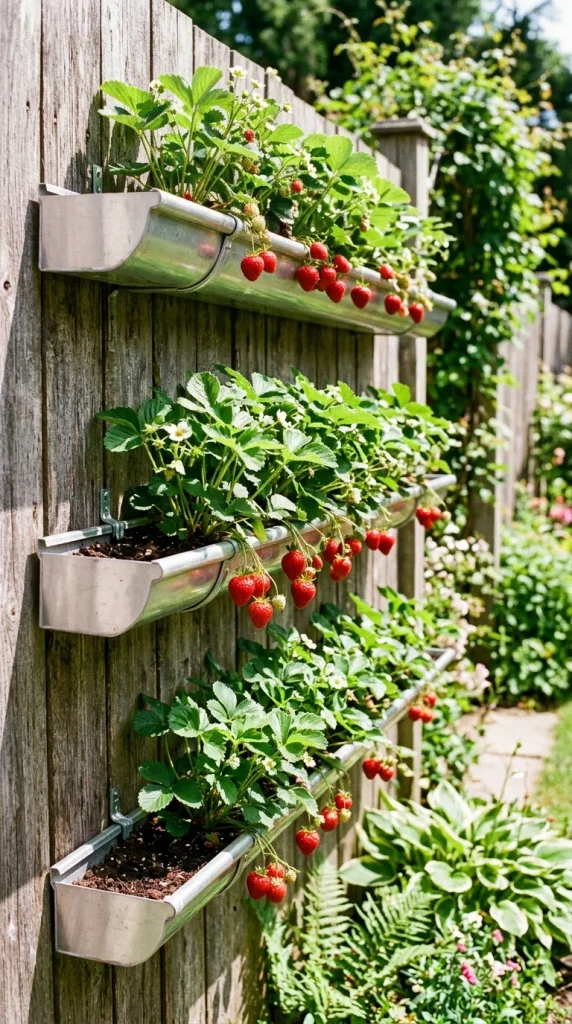
10. Salvaged Wheelbarrow Mobile Planter Carts
How to Create
Transforming a rusty, decommissioned metal wheelbarrow into a mobile decorative flower cart provides a versatile focal feature that can follow seasonal sun patterns across your yard. Sand down flaking rust patches from the steel basin using a stiff wire brush before coating the metal with an exterior rust-inhibiting metal primer. Drill eight half-inch drainage perforations through the lowest point of the basin belly, covering the holes with a breathable layer of heavy landscape fabric. Fill the wheeled cart with a balanced soil blend of rich organic compost and shredded leaf mulch, leaving three inches of rim space. Plant an assortment of vibrant annual flowers, such as orange calendula, dwarf sunflowers, and trailing nasturtiums, to build a full, rounded floral display. The functional wheel and rear handle assembly allow you to roll the entire garden display into sunny spots effortlessly throughout the growing season.

Common Beginner Mistakes and How to Avoid Them
A primary mistake when executing upcycled garden projects is utilizing reclaimed materials that contain toxic chemical compounds or heavy metal contaminants that can leach directly into edible vegetable crops. Repurposed railroad ties and telephone poles are heavily treated with toxic creosote, while older painted furniture pieces and reclaimed barn woods often carry dangerous lead-based paint coatings. Avoid this severe contamination risk by using only certified heat-treated pallet timbers, food-grade storage containers, and untreated raw hardwoods for any structure intended to cultivate edible crops. Another frequent error is neglecting to install adequate drainage holes in converted metal, plastic, or ceramic vessels. Watertight containers rapidly accumulate standing irrigation water during continuous rainstorms, depriving roots of oxygen and causing fatal root rot disease within days. Always drill generous drainage perforations and line bottom cavities with coarse permeable aggregates before introducing potting soil.
Practical Tips for Better Results
Achieving lasting success with containerized upcycled garden installations depends heavily on selecting appropriate lightweight soil blends tailored specifically for container ecosystems. Never fill repurposed planters with dense, heavy topsoil dug straight from existing ground garden beds, as natural soil compacts tightly inside containers, restricting drainage and suffocating plant roots. Instead, prepare a custom potting medium combining equal parts peat moss or coconut coir, coarse perlite, and screened organic compost to ensure a loose, moisture-retentive, and well-aerated root environment. Additionally, when assembling vertical installations like pallet racks or wall-mounted gutters, always verify the structural load capacity of the supporting wall or fence structure. Wet potting soil weighs significantly more than dry soil; securing mounting brackets directly into solid structural wall studs with heavy-duty structural screws prevents catastrophic collapses under maximum water saturation.
Styling, Presentation, or Organization Ideas
Properly coordinating your upcycled garden structures with modern landscape design principles ensures your outdoor space looks intentional, sophisticated, and visually cohesive from every perspective. Choose salvage materials that share a single textural theme or metal finish, such as pairing galvanized wash tub planters with raw cedar wood pallet stands and zinc-coated hardware across the garden area. This structural continuity prevents eclectic recycled elements from looking like disorganized yard junk, turning practical growing containers into attractive aesthetic assets that support your overall landscape theme. When organizing multiple upcycled containers across an open patio or deck, employ the rule of thirds by grouping vessels of varying heights together, such as a tall stacked terracotta tower beside a low galvanized tub. Keep the surrounding ground borders clear of loose debris, utilizing clean cedar wood mulch chips to frame your upcycled installations neatly.
Budget or Time Planning
Upgrading your garden infrastructure with upcycled materials eliminates the high retail markup of commercial planters while delivering custom growing solutions for a fraction of the cost. Sourcing free heat-treated wooden pallets from local construction sites or finding vintage wash tubs at local yard sales provides durable foundations for mere pennies. A standard small-scale project, such as building a vertical pallet herb rack or assembling a hanging colander basket, typically requires less than two hours of active manual assembly time from start to finish. Larger structural projects like cinder block planter benches or multi-tiered gutter systems can be completed comfortably within a single weekend afternoon by prepping materials beforehand. Allocating a modest budget toward high-grade stainless steel fasteners, landscape fabric membranes, and premium organic potting mixes ensures exceptional plant health and long-term structural integrity.
Creative Expansion and Advanced Inspiration
Once your fundamental garden upcycling methods are fully mastered, you can explore advanced engineering additions like automated low-pressure drip irrigation systems and integrated solar accent lighting. Threading flexible quarter-inch drip emitter tubing along the backside of vertical pallet planters or gutter runs ensures uniform, hands-free moisture delivery to every individual plant tier on an automated timer. This progressive modification reduces water evaporation losses significantly while maintaining optimal soil moisture during hot summer weather. Another creative concept involves embedding low-voltage solar micro-spotlights beneath the outer lips of galvanized wash tubs or climbing ladder trellises to illuminate your flowering vines after dark. Exploring these custom automated features allows gardeners to craft a highly sophisticated, self-sustaining growing space that balances eco-friendly sustainability with forward-thinking outdoor design trends.