10 Home Organization Aesthetic Ideas

Home Organization Aesthetic Ideas
Establishing a cohesive and structured living space requires an integrated approach to storage geometry, material consistency, and visual balance. On popular digital curation platforms like Pinterest, curated home organization aesthetic ideas serve as essential blueprints for converting chaotic, cluttered rooms into highly disciplined personal sanctuaries. Readers will discover how to select uniform storage vessels, implement modular vertical grids, hide daily utility accessories within texturized containers, and balance open shelving displays with absolute geometric precision. Successfully navigating the spatial limitations of residential floor plans allows homeowners to curate storage systems that feel functional, orderly, and authentic. This comprehensive manual delivers ten practical aesthetic storage blueprints that operate smoothly as accessible creative project templates, regardless of your current home decor background. By prioritizing clean lines, uniform labeling systems, and deliberate color grouping, these targeted strategies transform standard living zones into customized architectural spaces that strictly follow modern design principles.
The current movement in residential interior styling places massive premium value on high-utility organization fixtures that streamline everyday routines while reinforcing a clean, minimalist style. Curated functional storage systems have emerged as prominent trending ideas because they resolve common household challenges, such as scattered countertop items, overflowing closet floors, and chaotic pantry shelves, without requiring expensive structural renovations. The practical value of establishing a dedicated, highly organized spatial theme lies in its capacity to maximize immediate room utility while fostering a serene, clutter-free atmosphere that improves daily peace of mind. For beginners, executing a basic uniform jar decanting project or arranging a coordinated basket array provides an exceptionally manageable DIY project that introduces a high visual impact with a low initial financial investment. This disciplined styling approach balances physical adaptability with essential material durability, offering excellent planning guidance for long-term home organization. Implementing these handmade concepts allows individuals to personalize their rooms effectively while maintaining a highly polished presentation.
Successful execution of a comprehensive home organization project depends entirely on thorough sorting preparation and collecting the appropriate styling elements before initiating any physical reorganization steps. Required materials and tools generally include uniform borosilicate glass canisters, natural woven rattan baskets, acrylic drawer dividers, label makers with waterproof tape, floating timber shelves, cordless drills, electronic stud finders, tape measures, and velvet hangers. Planning considerations must strictly prioritize categorizing existing household items by frequency of use, ensuring that daily essentials remain within easy reach while seasonal archives reside on upper perimeter shelves. Measuring the exact internal dimensions of drawers, cabinets, and shelving units prevents purchasing improperly sized containers during subsequent staging phases. Clearing away unnecessary surface clutter, discarding expired products, and establishing a single, cohesive color palette guarantees a balanced presentation that anchors your new organization system smoothly.
1. Uniform Glass Pantry Decanting Walls
Step-by-Step Guide
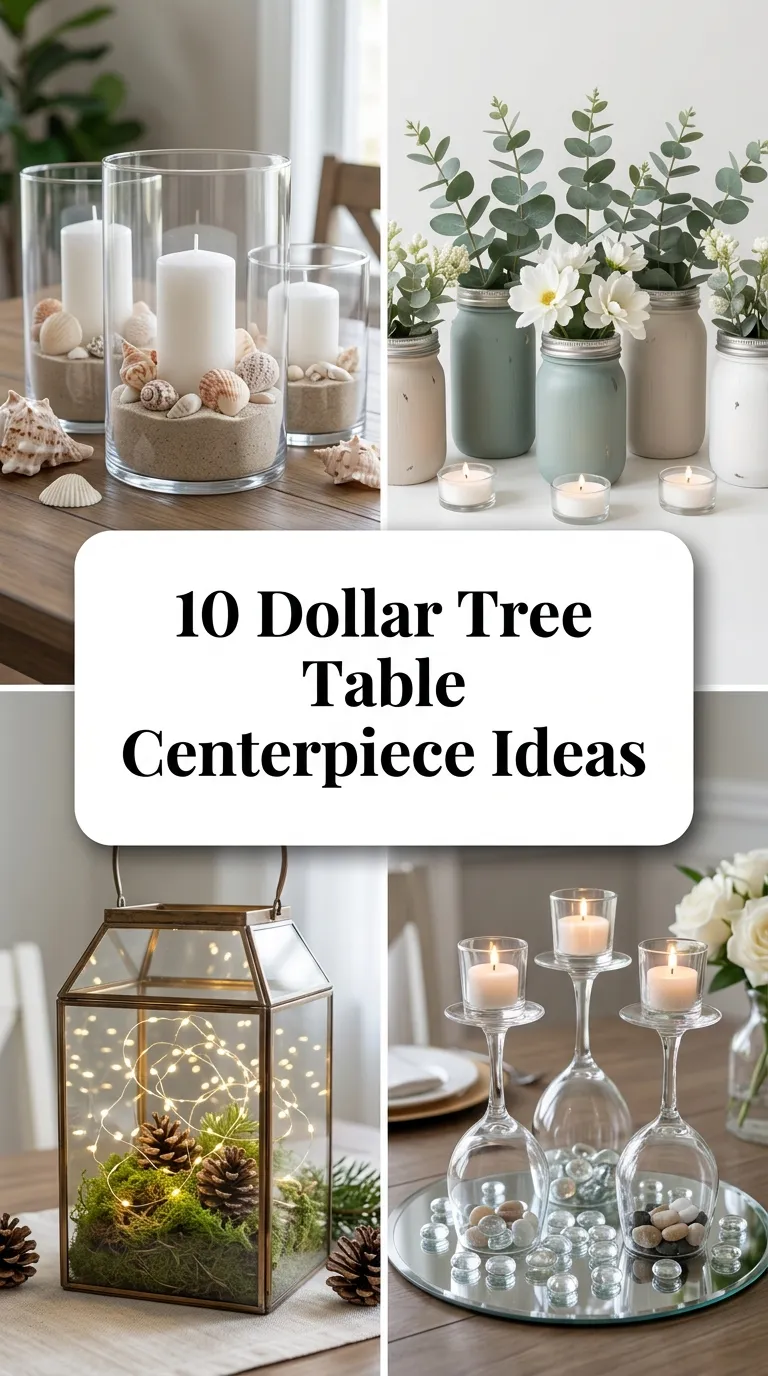
Configuring a uniform glass pantry decanting wall involves decanting dry bulk foods into matching clear glass canisters to eliminate chaotic brand packaging from open kitchen shelving. To execute this creative project, measure the vertical spacing between your pantry shelves, sourcing a set of matching borosilicate glass jars equipped with airtight natural bamboo lids in three uniform volume sizes. Wash and dry the glass jars thoroughly before transferring dry staples such as whole grains, pasta varieties, baking flours, and legumes into individual vessels. Use a specialized label maker loaded with matte white tape to print uniform, minimalist style text labels, affixing each label exactly two inches from the bottom base line across all jars. Arrange the filled glass canisters in neat linear rows along your pantry ledges, grouping similar food categories together. This disciplined method provides instant visual inventory clarity while keeping dry ingredients fresh and completely insect-free.

2. Monochromatic Fluted Drawer Dividers
Setup Method
Loose kitchen utensils, cutlery sets, and office accessories quickly create chaotic clutter when tossed randomly into wide, unpartitioned furniture drawers. Resolve this internal storage limitation by designing a custom modular divider layout utilizing sleek acrylic or bamboo compartment trays. Empty the drawer completely, wiping the interior clean before applying a non-slip silicone liner across the entire baseboard surface. Arrange a series of interlocking rectangular divider boxes within the drawer cavity, locking the trays tightly together to prevent lateral shifting during drawer opening and closing movements. Group your utensils strictly by functional type and size, aligning knives, forks, and specialty preparation tools into separate designated slots. This structured organization framework keeps your everyday cooking assets perfectly separated, eliminating morning drawer rummaging while preserving a crisp, elegant aesthetic every time the drawer slides open.

3. Woven Rattan Entryway Drop Zones
Execution Process
Entryway consoles and front hall tables often become cluttered catch-all zones for discarded house keys, sunglasses, daily mail letters, and stray footwear. Eliminate this visual chaos systematically by building a dedicated drop station centered around a trio of matching handcrafted woven rattan storage baskets. Position a narrow natural wood console table against your entry wall, anchoring a large circular mirror with a slim brass frame directly above the center line. Place a shallow, rectangular woven rattan tray on the console surface to hold delicate ceramic catchall bowls for car keys, coins, and wallets. Slide two large, structured square rattan storage trunks beneath the open base of the console table to conceal rolled shoes, umbrellas, and winter accessories out of sight. This organic styling choice introduces rich tactile warmth into your entryway while maintaining strict functional boundaries for everyday incoming items.

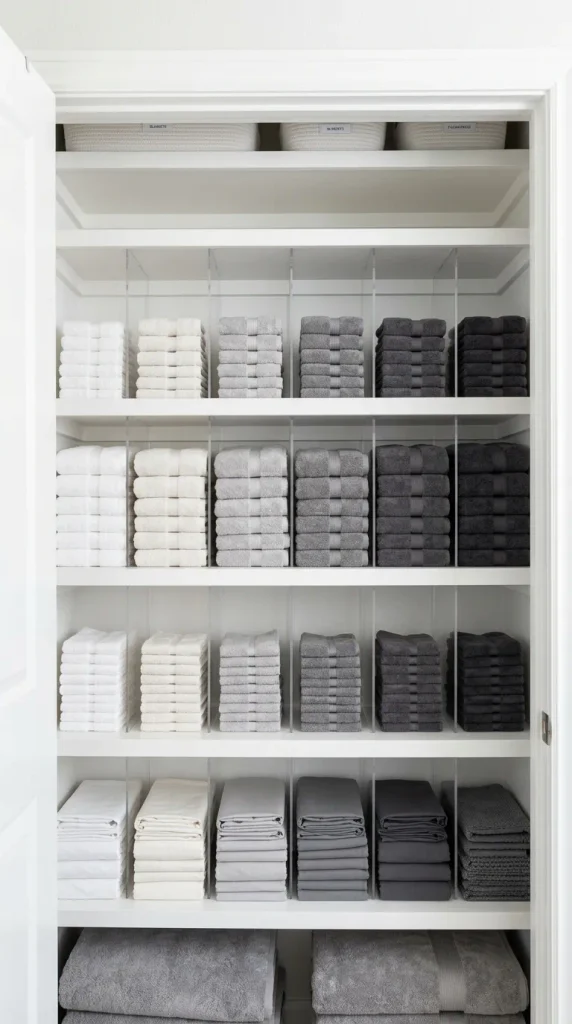
4. Floating Linen Closet Acrylic Cubbies
How to Create
Piles of folded bed sheets, washcloths, and bath towels frequently topple over inside open linen closets, creating an unorganized and messy appearance across high shelves. Incorporate vertical acrylic shelf dividers to construct high-density, transparent storage bays that keep fabric stacks standing perfectly upright. Slide heavy-duty clear acrylic divider clips directly onto your wooden or wire linen closet shelves, spacing each vertical separator exactly twelve inches apart across the shelf run. Fold all bath towels, flat sheets, and duvet covers using a uniform square rolling method, ensuring that all folded fabric edges face forward toward the closet door. Stack folded linens neatly within the transparent cubbies, arranging the textiles in a subtle color gradient from crisp white to deep charcoal gray. This modern organization strategy prevents tall stacks from leaning sideways, turning basic utility closets into luxury boutique displays.
5. Color-Coordinated Open Wardrobe Racks
Setup Method
Overcrowded bedroom wardrobes packed with mismatched plastic hangers and uncoordinated garments make daily outfit selection frustrating and visually exhausting. Streamline your personal dressing routine by installing an open-concept industrial steel clothing rack paired with uniform, ultra-thin non-slip velvet hangers. Hang all matching velvet hangers facing the exact same direction along the upper metal rail, maintaining a uniform one-inch air gap between individual garment shoulders. Organize your hanging clothing collection strictly by garment type from left to right, sorting jackets, button-down shirts, sweaters, and trousers in continuous order. Within each garment category, arrange the fabrics in an ascending color flow from light creams and pastels to deep earth tones and blacks. This minimalist style presentation transforms your clothing collection into an attractive focal feature while keeping daily garments wrinkle-free and immediately accessible.

6. Minimalist Cord Concealment Cable Boxes
Step-by-Step Guide
Tangled computer cords, smartphone charging cables, and bulky power strips create severe visual clutter across home office workstations and bedside table surfaces. Construct a clean, concealed power management station by enclosing active power strips inside a minimalist style matte ABS plastic cable organizer box. Route all excess charging cords, laptop power bricks, and adapter cables neatly into the internal box cavity, securing long wire loops together using low-profile velcro cable wraps. Direct the individual charging ends through the specialized side rubber routing slots on the cable box lid, keeping the main power strip completely hidden beneath a sleek white cover. Place the streamlined cable box along the rear baseboard edge of your desk, labeling the individual cord tips with tiny silicone cable clips. This simple project eliminates dangerous electrical wire nests, protecting curious pets while restoring a calm, clutter-free desk surface.

7. Tiered Bamboo Spice Shelf Risers
How to Make
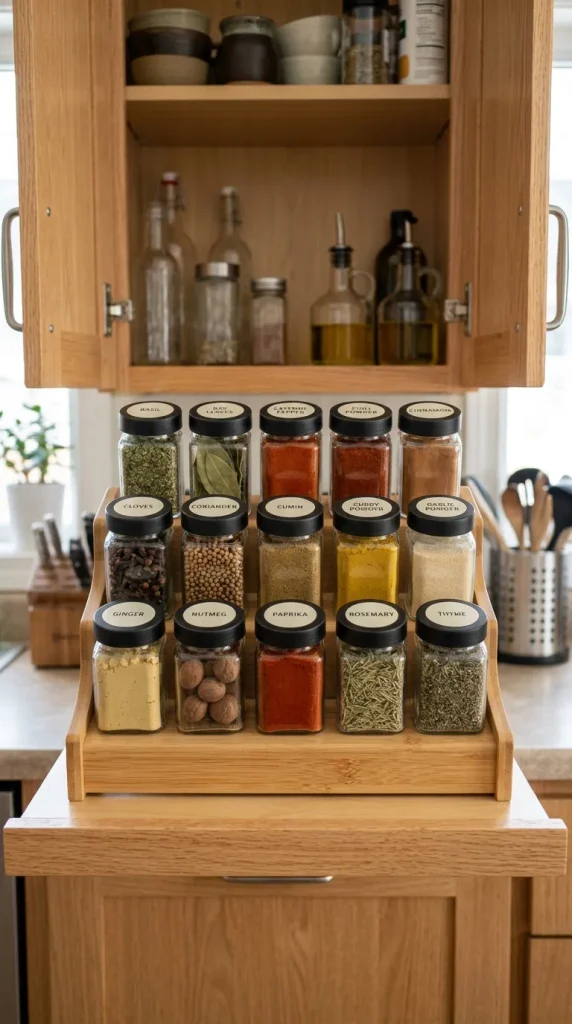
Deep kitchen spice cabinets often hide small condiment jars behind larger bottles, making it difficult to locate essential seasonings during active meal preparations. Upgrade your culinary storage efficiency by installing expandable tiered bamboo shelf risers inside your primary spice cupboard. Place a three-tiered natural bamboo display step riser against the rear wall of the cabinet, expanding the side wings to fit the exact width of the shelf opening. Decant all dried herbs, ground spices, and seasoning blends into matching square glass spice jars fitted with clean matte black shaker lids. Affix round minimalist spice labels to the top center of each lid, arranging the jars alphabetically across the stepped bamboo tiers. The elevated stadium-style layout ensures every single spice label remains fully visible at eye level, speeding up your cooking workflow while maximizing vertical cabinet volume.
8. Back-of-Door Canvas Craft Organizers
Execution Process
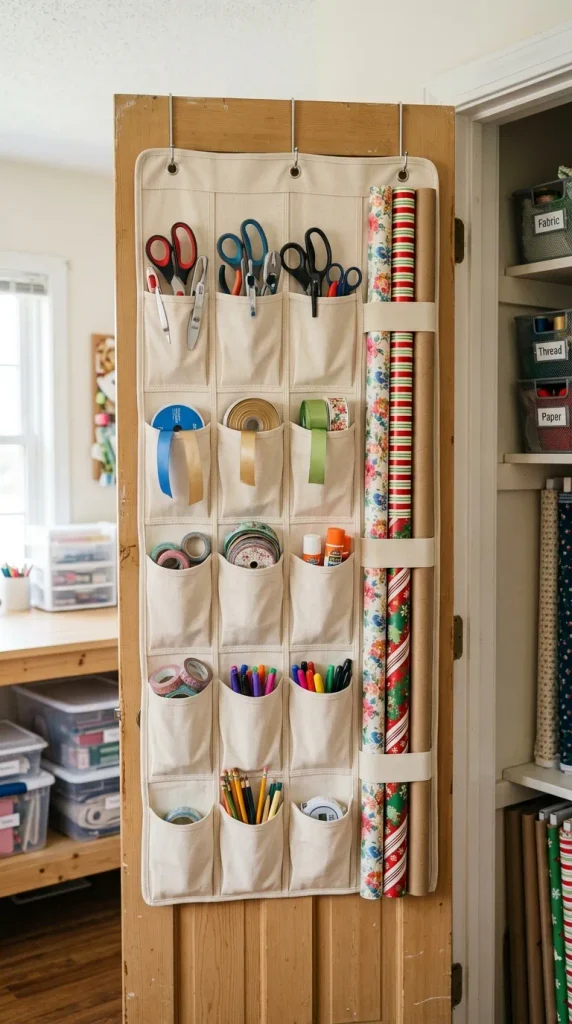
Scattered craft supplies, wrapping paper rolls, and hardware tools can quickly overwhelm secondary storage closets and home hobby workspaces. Resolve this storage challenge cleanly by mounting a heavy-duty multi-pocket canvas hanging organizer flat against the back face of your closet door. Hang a reinforced cream-colored canvas organizer featuring fifteen individual structured pockets over the top door trim using three low-profile metal brackets. Slide crafting tools, scissors, glue guns, rolled ribbons, and sewing notions into designated pocket tiers based on project frequency. Secure long wrapping paper rolls vertically along the side edges using adjustable elastic retaining straps sewn into the canvas backing. This zero-footprint storage solution keeps small creative accessories organized and immediately visible, freeing up valuable craft room desk drawers for large layout projects.
9. Recessed Bathroom Niche Stone Trays
Setup Method
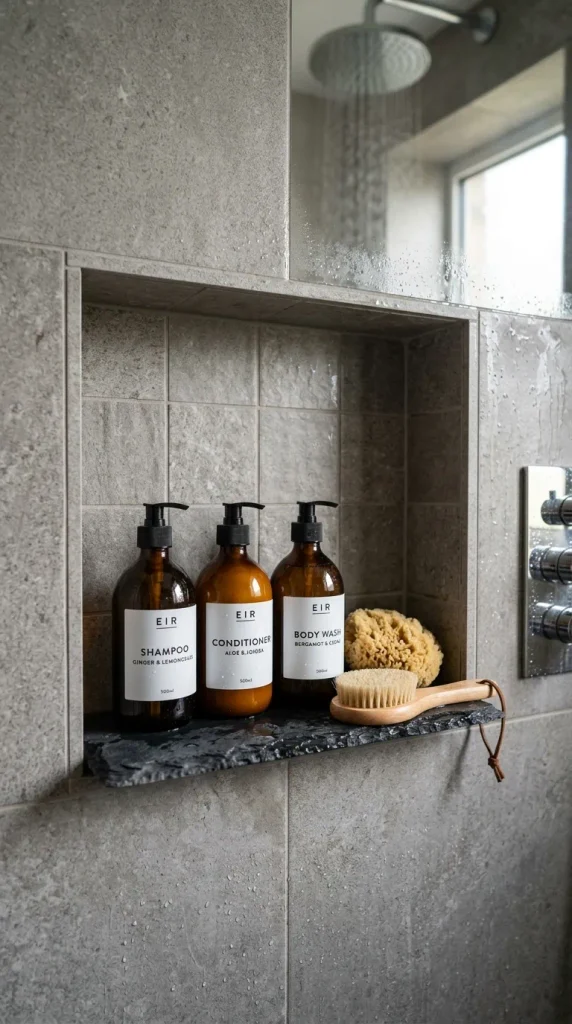
Shampoo bottles, body washes, and bar soaps resting directly on shower ledges often leave unsightly mineral deposits, soap scum rings, and visual clutter across tiled walls. Elevate your bathroom styling by staging daily cleansing essentials on a custom natural slate or honed marble storage tray within your shower niche. Select a heavy-duty rectangular white marble or dark slate stone tray that fits the base dimensions of your recessed shower wall cavity. Decant liquid soaps, body washes, and shampoos into a coordinated trio of amber glass pump dispenser bottles equipped with waterproof, oil-resistant vinyl labels. Place the uniform bottles neatly side by side on the stone tray, adding a natural sea sponge and a wooden dry brush for organic texture. This spa-inspired arrangement protects porous shower tiles from soap residue while creating an orderly, luxurious bathing environment.
10. Magnetic Under-Shelf Storage Jars
Step-by-Step Guide
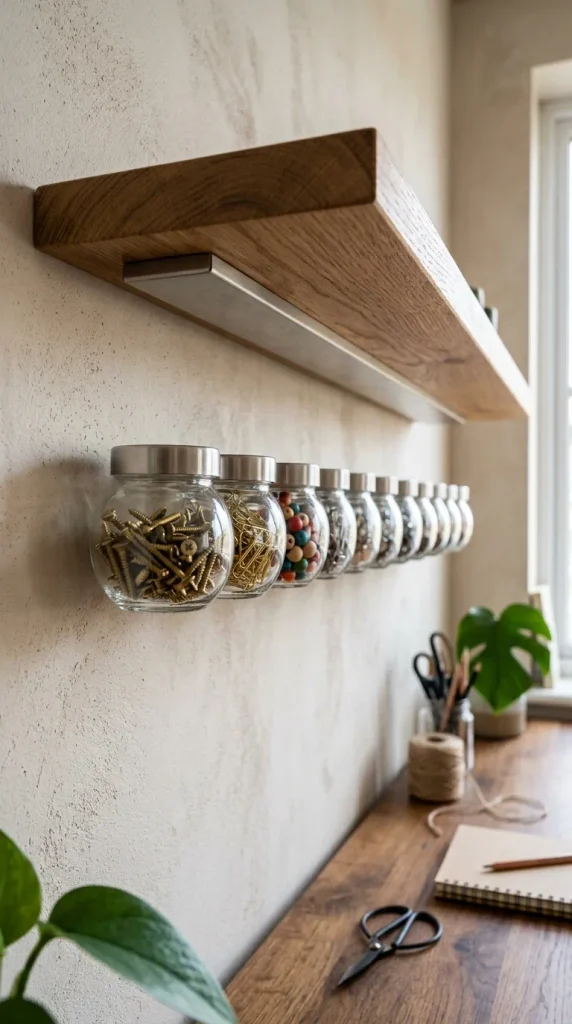
Utilizing the empty, forgotten air space directly underneath floating shelves allows you to build a clever secondary storage zone for small household hardware and crafting parts. Source a set of twelve matching round metal-lidded glass storage jars, cleaning the lids thoroughly with rubbing alcohol to remove any protective oils. Secure a strong, self-adhesive magnetic steel strip flat against the underside surface of your wooden floating shelf using small countersunk wood screws. Fill the glass jars with small hardware items such as brass screws, nails, paper clips, or tea bags, screwing the metal lids tightly onto the glass bodies. Snap the metal lids directly to the magnetized strip beneath the shelf, allowing the glass jars to hover cleanly above your desktop or counter surface. This accessible project delivers exceptional spatial efficiency, creating a fun, functional storage accent.
Common Beginner Mistakes and How to Avoid Them
A primary mistake when executing home organization projects is purchasing trendy storage containers, acrylic bins, and decorative baskets before completing a thorough sorting and measuring process. Buying containers without knowing your exact item inventory leads to mismatched bin sizes, wasted storage capacity, and overcrowded shelves that look more chaotic than the original clutter. Avoid this common planning trap by pulling every item out of the target space, categorizing belongings into keep, donate, and discard piles, and measuring interior shelf dimensions before purchasing vessels. Another frequent error is selecting opaque, highly decorative storage boxes without implementing an effective labeling system. When storage contents are completely hidden from view and lack descriptive exterior labels, household members struggle to find necessary items and often return belongings to the wrong bins, quickly breaking down your organized system.
Practical Tips for Better Results
Achieving an enduring, professional-grade finish with home organization projects depends heavily on establishing a strict vertical access hierarchy across every room in your home. Assign your most frequently utilized items, such as daily cooking oils, active work documents, and everyday skincare essentials, to the prime horizontal zone between your waist and eye level. Reserve lower baseboard drawers and deep under-bed containers for medium-frequency utility tools, placing seasonal holiday decorations and long-term archives on the highest closet shelves. Additionally, when applying adhesive labels to glass jars or plastic bins, always use an alcohol wipe to clean the target surface thoroughly before application. Ensuring a grease-free, dust-free bonding surface prevents label corners from peeling, curling, or bubbling over time, guaranteeing a razor-sharp, uniform appearance across your entire storage array.
Styling, Presentation, or Organization Ideas
Properly coordinating your home storage containers with modern interior design principles ensures your personal living environment looks polished, highly intentional, and visually balanced from every viewing angle. Choose organization vessels that share a single texture family or neutral color palette, such as pairing warm woven rattan baskets with natural bamboo lids and soft cream canvas bins across adjoining rooms. This visual uniformity prevents multi-zone organization systems from looking disjointed, turning basic storage hardware into attractive aesthetic assets that support your overall interior decor. When arranging decorative objects along open pantry ledges or living room bookshelves, employ the rule of thirds by balancing functional storage canisters with small potted green herbs or sculptural ceramic vases. Keep surrounding floor boundaries clear of loose clutter, utilizing clean neutral area rugs to anchor furniture bases beautifully.
Budget or Time Planning
Transforming your home organization systems does not require purchasing expensive designer storage suites or hiring professional organizers for massive financial sums. Simple modifications like decanting dry pantry goods into glass canning jars or organizing a messy cutlery drawer with modular inserts are highly effective budget ideas that require minimal materials and provide immediate daily returns. A standard pantry decanting project or linen closet overhaul typically requires two to three hours of active manual sorting and labeling time from start to finish. Setting aside a focused weekend morning allows you to empty, clean, sort, and restock an entire kitchen cupboard or bedroom wardrobe systematically without disrupting your daily routine. Allocating a modest portion of your project budget toward high-quality waterproof labels, durable borosilicate glass, and sturdy acrylic dividers ensures long-term system durability.
Creative Expansion and Advanced Inspiration
Once your core home organization layouts are fully operational and mastered, you can elevate your spaces by incorporating advanced custom additions like integrated low-voltage interior cabinet lighting. Installing micro-thin, motion-activated LED light bars along the underside of pantry shelves or inside dark wardrobe cavities illuminates your neatly organized storage bins automatically whenever a door opens. This modern enhancement highlights the clean structural lines of your labeled canisters, turning functional storage spaces into striking architectural display features after dark. Another progressive design concept involves building custom slide-out wooden storage trays equipped with soft-close heavy-duty drawer slides inside deep lower kitchen base cabinets. Exploring these custom carpentry enhancements allows homeowners to craft a highly sophisticated, ergonomic living environment that perfectly balances daily household utility with forward-thinking minimalist design trends.